Financial Statements Are Decision Drivers
Too many owners treat financial statements like report cards.
Something the accountant produces once the year is already over.
That’s backwards.
Financial statements are decision drivers.
They tell you:
- whether pricing is working
- whether margins are healthy
- whether overhead is creeping up
- whether growth is helping the business — or quietly hurting it
If the owner doesn’t understand their financials deeply, they don’t actually control the business.
The Metrics That Actually Matter
Every business should have a small group of performance metrics that tell the real story.
Not dozens of dashboards.
Usually around ten numbers that show immediately whether the business is healthy or drifting.
Examples include:
- net profit margin
- customer acquisition cost (CAC)
- pricing effectiveness
- sales conversion rates
- overhead structure
- customer retention and recurring revenue
What gets measured gets managed.
Without those numbers, you’re flying blind.
Where Profit Improves the Fastest
Most businesses don’t need radical change to improve profitability.
They need discipline.
The biggest improvements usually come from:
- Pricing discipline: Many companies price more like darts than math. Guessing instead of calculating.
- Controlling fixed overhead: Expenses creep up slowly. Most owners don’t notice until the margins are gone.
- Eliminating unprofitable services: Not all revenue is good revenue. Some work simply keeps the team busy without producing profit.
- Sales discipline: When something works, document it. When something fails, learn from it and eliminate it.
- Performance-driven incentives: Clear expectations and incentive structures create accountability and better results.
And one thing every owner should understand:
Revenue growth with bad margins just accelerates the problem.
Systems Create Consistency
Strong businesses run on systems.
- Sales processes.
- Operational workflows.
- Training.
- Service delivery.
If success cannot be repeated, it cannot be scaled.
Back-end operations should also be automated wherever possible.
Automation reduces cost, increases consistency, and frees the team to focus on work that actually creates value.
Marketing That Drives Action
Large global brands spend money on brand awareness.
Small businesses usually can’t afford that luxury.
They need marketing that drives action.
- Leads.
- Sales.
- Referrals.
One of the most powerful — and often underutilized — growth tools is a strong referral network.
Built properly, referral relationships can become one of the most reliable sources of high-quality clients a business will ever have.
Retention Is King
Customer acquisition is expensive.
Retention is where stability is built.
Businesses that focus on long-term relationships and recurring revenue create far more predictable performance.
Retention compounds.
Profit Is Built - Not Hoped For
Healthy businesses don’t happen by accident.
They are built through:
- disciplined financial understanding
- intentional pricing
- strong operational systems
- clear performance metrics
When those elements are in place, profit stops being unpredictable.
It becomes the natural result of how the business is built.
Forzani Business Education Tools
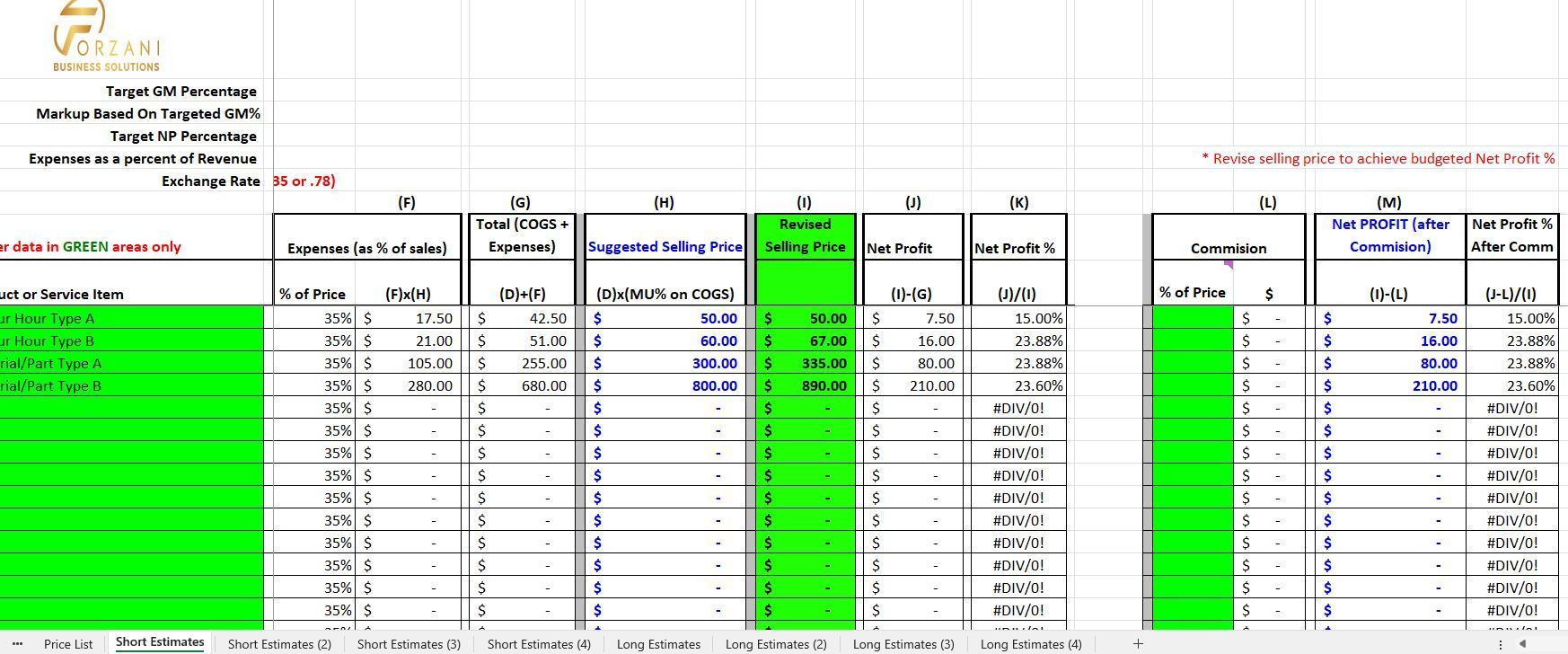
Part of this process includes using practical operational and financial frameworks through Forzani Business Education to help owners better understand pricing, margins, profitability, operational efficiency, and long-term business performance.
The goal is not more reporting for the sake of reporting. It is creating clearer visibility so owners can make stronger decisions with greater confidence.

Clarity in business.
Alignment in leadership.
Forward momentum that lasts.
Certified Licensed Coach with Forzani Business Education
Website Maintained and Designed by: